KPAX: MTN News | Maddie Kiefer
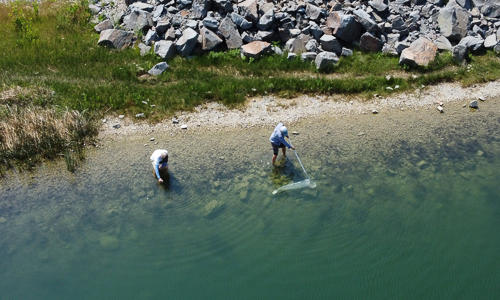
Five local organizations joined forces Saturday for the sixth annual Flathead Waters Cleanup, mobilizing volunteers across rivers, lakes, and wetlands throughout the Flathead Valley.

KPAX: MTN News | Maddie Kiefer
Five local organizations joined forces Saturday for the sixth annual Flathead Waters Cleanup, mobilizing volunteers across rivers, lakes, and wetlands throughout the Flathead Valley.
Whitefish Pilot
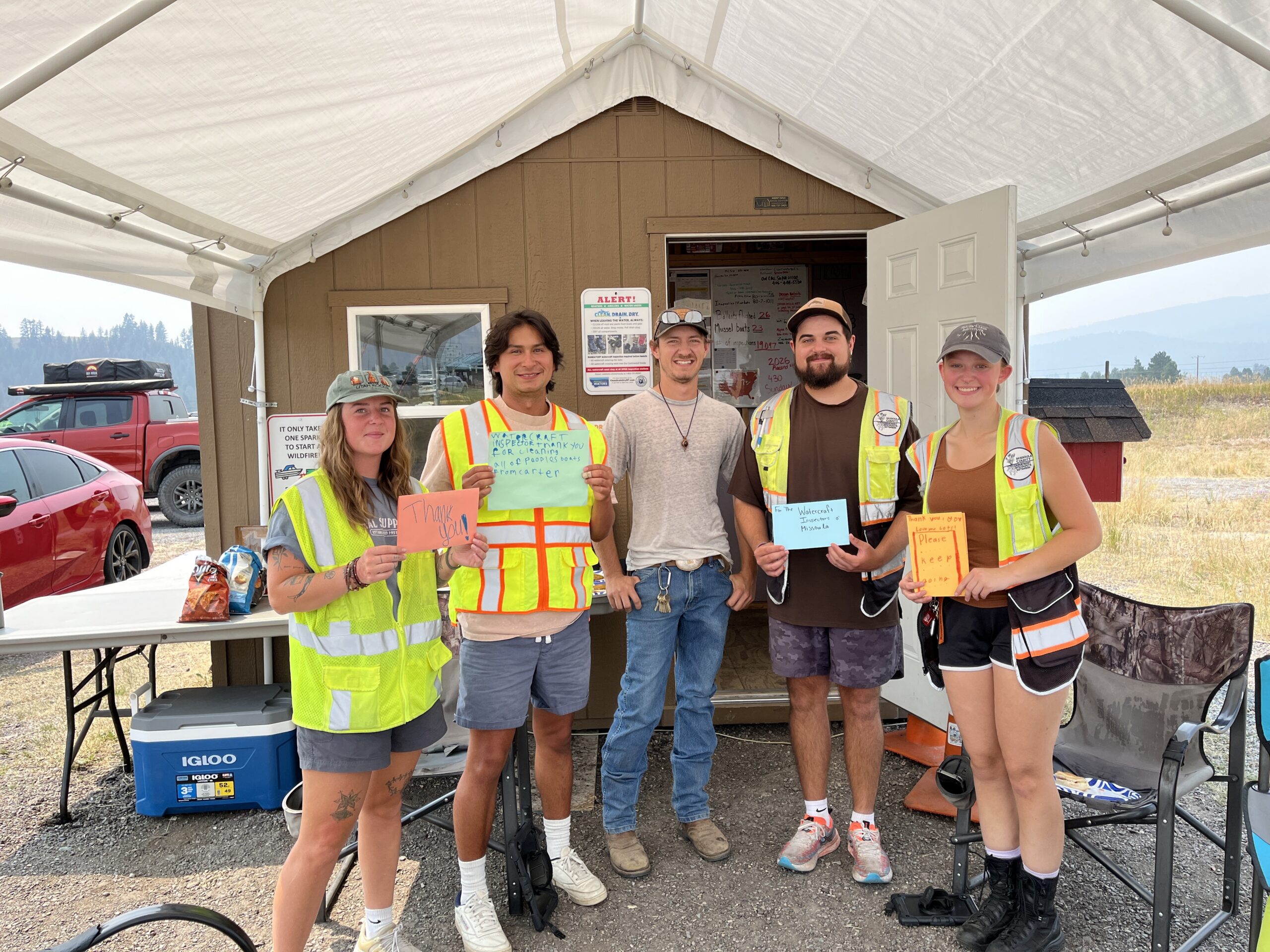
The Western Montana Conservation Commission recognizes the dedicated watercraft inspectors who protect Montana’s waters from aquatic invasive species during the Sixth Annual Watercraft Inspector Appreciation Week from Aug. 2 – 8.
Seeley Swan Pathfinder | Karen Williams, Clearwater Resource Council Director of Aquatic Programs
The Clearwater Resource Council (CRC) was awarded a grant from the Western Montana Conservation Commission to financially assist homeowners in getting their septic systems inspected and pumped. Together with the WMCC, CRC will be developing the eligibility requirements for free or subsidized septic system maintenance and communicating the program eligibility in June.
Hailey Smalley | Daily Inter Lake
Aquatic invasive species continued to spread in 2025 despite the best efforts of state wildlife officials.
Volunteers and biologists took 3,200 samples from more than 300 Montana waterbodies in 2025. The samples were analyzed for eDNA and other microscopic particles indicative of the bevy of invasive aquatic species that have descended on North America’s waterways in the past decades.
By the end of the year, state officials had catalogued about a dozen new occurrences of aquatic invasive species in the state.
Tom Woolf, the Aquatic Invasive Species Bureau chief for Montana Fish, Wildlife and Parks, said he wasn’t surprised to see samples from Salmon Lake test positive for the invasive faucet snail. Nearby waterbodies in the Swan Valley had already shown signs of the snail, and Woolf surmised that the lake, which sits just north of Clearwater, was already a lost cause.
Fragrant waterlily was detected for the first time in Middle Foy Lake, and two species of snail, one hailing from New Zealand and the other from Malaysia, expanded to lakes in eastern Montana.
All four species had been found in Montana previously.
BUT THE war against aquatic invasive species is far from over, said Woolf, and the best way to fight the incursion is to target the boats that ferry species from one waterbody to the next.
“They’re the alien spaceship that’s going to introduce them to the state, and we have to make sure we get them,” said Woolf at a Jan. 21 meeting of the Western Montana Conservation Commission.
Oliver Waite | Times-Leader
The Western Montana Conservation Commission (WMCC) has announced their decision to award approximately $2 million from the U.S. Environmental Protection Agency in support of two green stormwater infrastructure projects in western Montana.
Martin Kidston | Missoula Current
iting the heat produced by the Missoula Public Library’s roof and the need to address polluting stormwater runoff, members of the City Council on Wednesday approved a $149,000 contract to turn the rock roof into a green island.
To aid in the project, the city landed a $1 million grant from the Western Montana Conservation Commission’s green stormwater infrastructure program. The grant requires a 25% match, with the Library Foundation providing $70,0000, and the Missoula Redevelopment Agency (MRA) and Missoula County each contributing roughly $75,000 over the next two fiscal years.
Hailey Smalley | Daily Inter Lake
This summer, researchers are slated to begin a new $4.9 million transboundary study aimed at promoting “a common understanding” of longstanding pollution concerns in the Kootenai River system.
The International Joint Commission, the entity charged with resolving transboundary water disputes between the U.S. and Canada, ordered the study in March 2024 amid rising concerns about the effect that British Columbia mining operations are having on regional water quality. Runoff from the mines flows into the Elk River, a major tributary of the Kootenai River.
WaterNow Alliance
WaterNow will partner with the City of Missoula and the Western Montana Conservation Commission (WMCC) to analyze and evaluate stormwater and green stormwater infrastructure (GSI) programs in various states, to inform the development of a funded, sustainable GSI program in Montana. The project team will identify best practices from GSI programs in comparable states; facilitate discussions with the WMCC’s Stormwater Advisory Council, local governments, and other stakeholders to ensure alignment with community priorities; draft policy recommendations and best management practices tailored to Montana’s unique regulatory, environmental, and funding context; and identify federal, state, and private funding sources. This research will inform the creation of an implementation roadmap, outlining the next steps for launching a sustainable GSI program.
Kiana Wilson | KPAX
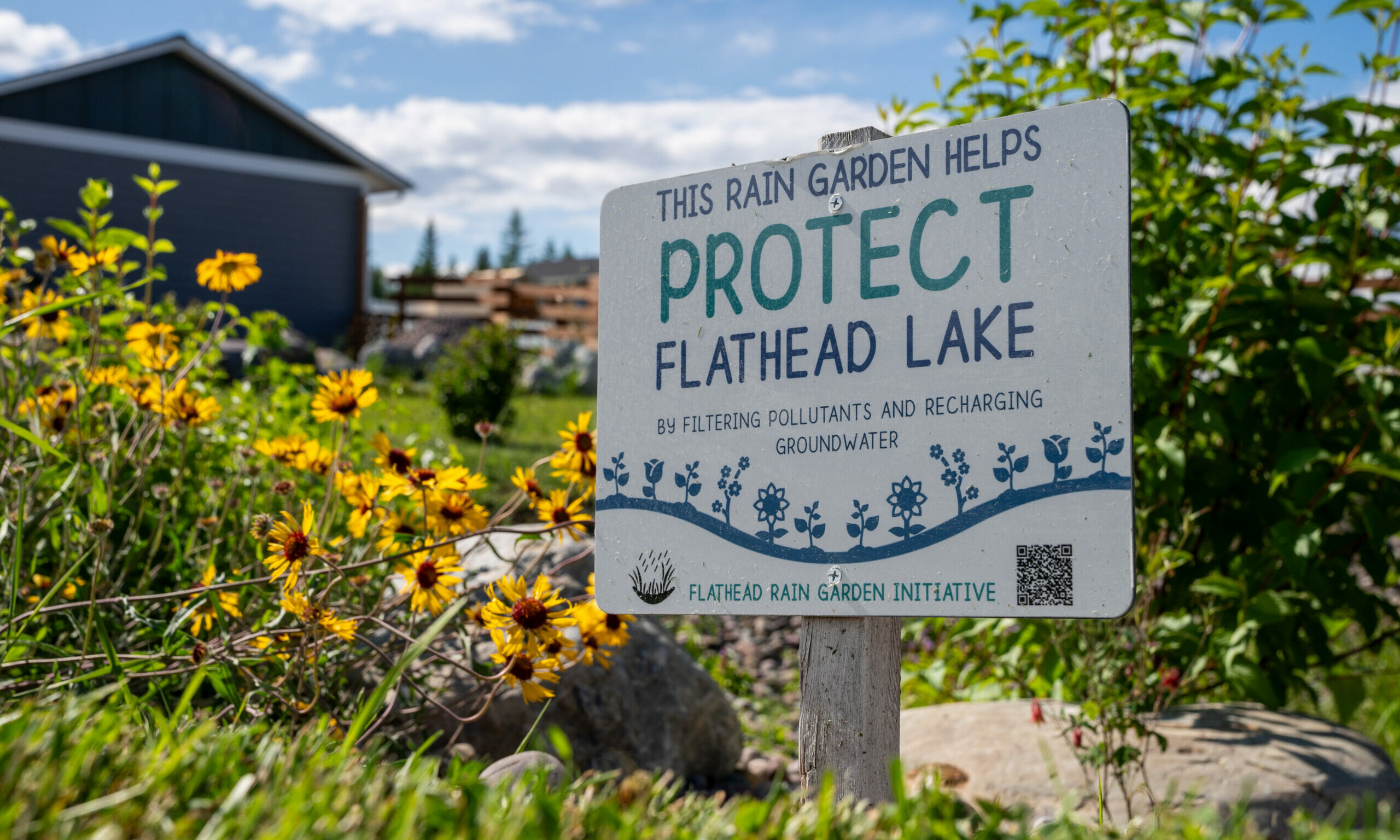
The Flathead Rain Garden Initiative has been helping keep pollutants out of local water bodies and this summer, two new rain gardens have been added to the program. Working with the Flathead Conservation District and Western Montana Conservation Commission, Habitat for Humanity installed the rain garden to help filter the water that comes from their parking lot.
Emily Brown | KPAX
Watershed stewards are working to keep aquatic invasive species from coming into Montana. “Montana’s waterways are absolutely beautiful and so much fun, but they’re also a part of our culture,” said Western Montana Conservation Commission (WMCC) spokeswoman Stephanie Murphy.