iting the heat produced by the Missoula Public Library’s roof and the need to address polluting stormwater runoff, members of the City Council on Wednesday approved a $149,000 contract to turn the rock roof into a green island.
To aid in the project, the city landed a $1 million grant from the Western Montana Conservation Commission’s green stormwater infrastructure program. The grant requires a 25% match, with the Library Foundation providing $70,0000, and the Missoula Redevelopment Agency (MRA) and Missoula County each contributing roughly $75,000 over the next two fiscal years.
MISSOULA, Mont – The Western Montana Conservation Commission (WMCC) announces its next two-day meeting on September 9 -10, 2025 in Pablo at the Salish Kootenai College.
“As the Western Montana Conservation Commission hosts their September meeting in the heart of the Flathead Indian Reservation, we invite all our friends and neighbors to attend,” encouraged Rich Janssen Jr., the natural resources department head for the Confederated Salish and Kootenai Tribes (CSKT), and WMCC Member. “This is a great opportunity for the local community interested in our waters to learn about WMCC’s and CSKT’s important work.”
The meeting includes a presentation from the CSKT-Montana Compact Implementation Technical Team, and an interactive panel about CSKT’s Aquatic Invasive Species prevention and mitigation efforts. The Commission will provide updates on their aquatic resource protection projects and their Stormwater and Septic Leachate Toxics Reduction Grant Program.
“We’re thrilled to bring forward to the Commission two innovative grant applicants for our Showcase Green Stormwater Infrastructure Projects” shared WMCC Executive Director Casey Lewis. “With funding capped at $1.1 million each, these projects will serve as community hubs for stormwater education while simultaneously playing a critical role in keeping toxic stormwater runoff from reaching our rivers, lakes and streams.”
The meeting is open to the public and a public comment period will be held each day. To view the agenda, see here. To attend the meeting virtually, please register here.
About the Western Montana Conservation Commission:
The Western Montana Conservation Commission is administratively attached to the Montana Department of Natural Resources and Conservation (DNRC). WMCC is tasked with holding public hearings and monitoring the condition of aquatic and natural resources in western Montana, supporting the continuation of a comprehensive aquatic invasive species prevention program, enhancing collaboration among natural resource partners and agencies, and undertaking investigations related to water quality and natural resource utilization. Learn more at westernmtwaters.com.
HELENA, Mont. – The Western Montana Conservation Commission (WMCC) today invited Montanans to celebrate the Fifth Annual Watercraft Inspector Appreciation Week from August 4 to 8. Watercraft inspectors protect Montana’s waters by preventing the spread or introduction of aquatic invasive species at inspection stations across the state.
“We recognize the dedication, friendliness and attention to detail the Montana watercraft inspectors deliver every day to protect our water bodies. They are our first line of defense against aquatic invasive species,” said WMCC Executive Director Casey Lewis.
Per Montana law, all watercraft, from pontoons to paddleboards, must stop at every watercraft inspection station they encounter. At the station, inspectors will ask a few questions, inspect the watercraft, and, if necessary, complete a decontamination. Inspectors are trained to ensure all watercraft are cleaned of any plants, mud, or sediment; drained of any standing water; and dried.
Dedicated inspectors have checked over 61,000 vessels in the 2025 season so far. Inspectors have prevented 28 mussel-fouled vessels and over 325 with aquatic weeds from entering Montana’s waters. More than 30 roadside stations across the state are operated by the Montana Department of Fish, Wildlife & Parks and partner organizations such as the Ravalli station, managed by the Confederated Salish and Kootenai Tribes, and the Clearwater Junction station, managed by Missoula County.
“The Clearwater Junction station sees over 25,000 watercrafts in a season and serves as a major line of defense for the Blackfoot, Clearwater and everything downstream,” says Rebecca Busby of Missoula County Aquatic Invasive Species District. “Montana is one of only a handful of states that remains mussel-free, and we’re proud to say that our program and community are helping to keep it that way.”
The WMCC, a commission attached to the DNRC, supports inspectors by bringing supplies to partner-led inspection stations as a thank you while highlighting the important efforts of watercraft inspectors in Montana. Boaters and other water enthusiasts are encouraged to stop by local watercraft inspection stations during Watercraft Inspector Appreciation Week to thank our friendly watercraft inspectors for their dedication and attention to detail in protecting Montana’s waters.
To protect Montana’s waters from aquatic invasive species, the WMCC encourages all Montanans to take advantage of decontamination stations, clean, drain, and dry all watercraft (motorized and non-motorized) and gear, and stop at all inspection stations.
For more information on aquatic invasive species prevention efforts in Montana, visit: fwp.mt.gov/ais.
This summer, researchers are slated to begin a new $4.9 million transboundary study aimed at promoting “a common understanding” of longstanding pollution concerns in the Kootenai River system.
The International Joint Commission, the entity charged with resolving transboundary water disputes between the U.S. and Canada, ordered the study in March 2024 amid rising concerns about the effect that British Columbia mining operations are having on regional water quality. Runoff from the mines flows into the Elk River, a major tributary of the Kootenai River.
WaterNow will partner with the City of Missoula and the Western Montana Conservation Commission (WMCC) to analyze and evaluate stormwater and green stormwater infrastructure (GSI) programs in various states, to inform the development of a funded, sustainable GSI program in Montana. The project team will identify best practices from GSI programs in comparable states; facilitate discussions with the WMCC’s Stormwater Advisory Council, local governments, and other stakeholders to ensure alignment with community priorities; draft policy recommendations and best management practices tailored to Montana’s unique regulatory, environmental, and funding context; and identify federal, state, and private funding sources. This research will inform the creation of an implementation roadmap, outlining the next steps for launching a sustainable GSI program.
LIBBY, Mont. – The Western Montana Conservation Commission (WMCC) will hold its next two-day meeting on Wednesday, May 28 and Thursday, May 29, 2025, at the Libby Dam Visitor Center.
“Lincoln County is one of the best kept secrets in Montana and it is an honor to share this area by hosting the WMCC meeting,” shared Lincoln County Commissioner Noel Duram. “The quality of the water for our communities is so important and WMCC is a big part of facilitating ways for industry, conservation groups, and users to work together with local, state, tribal and federal governments to ensure a clean future for the waters in western Montana.”
The Commission will provide updates on their aquatic resource protection projects including aquatic invasive species prevention, reducing toxic pollution in the Columbia River Basin through grant funding and ongoing community outreach events. The meeting will also include a behind-the-scenes tour of Libby Dam.
Prior to the tour, Greg Hoffman, fishery biologist for the U.S. Army Corps of Engineers on the Kootenai River at Libby Dam and WMCC Member, will speak about local and regional coordination of dam operations as well as local ecosystem enhancement efforts. “Lake Koocanusa, created by Libby Dam, is a transboundary body of water that provides flood risk reduction and hydropower generation,” emphasized Hoffman. “The reservoir also provides vital water for ecosystem function downstream in the Kootenai River.”
A photo ID is required to attend the meeting’s tour of Libby Dam. The meeting is open to the public and a public comment period will be held each day.
About the Western Montana Conservation Commission:
The Western Montana Conservation Commission is administratively attached to the State of Montana Department of Natural Resources and Conservation (DNRC). WMCC is tasked with holding public hearings and monitoring the condition of aquatic and natural resources in western Montana, supporting the continuation of a comprehensive aquatic invasive species prevention program, enhancing collaboration among natural resource partners and agencies and undertaking investigations related to water quality and natural resource utilization. Learn more at www.westernMTwaters.com
About DNRC:
The DNRC’s mission is to help ensure that Montana’s land and water resources provide benefits for present and future generations. For more information visit dnrc.mt.gov.
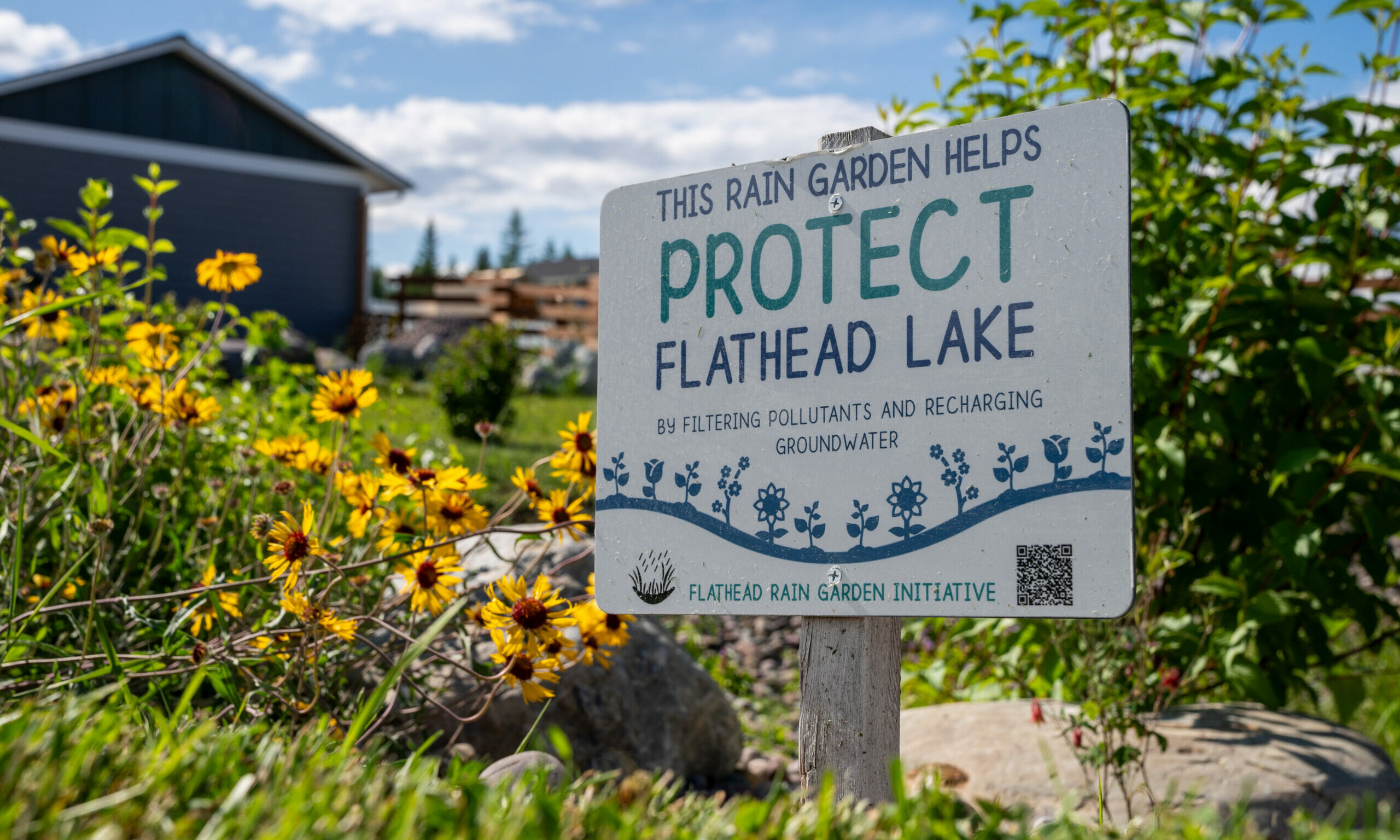
The Flathead Rain Garden Initiative has been helping keep pollutants out of local water bodies and this summer, two new rain gardens have been added to the program. Working with the Flathead Conservation District and Western Montana Conservation Commission, Habitat for Humanity installed the rain garden to help filter the water that comes from their parking lot.
Watershed stewards are working to keep aquatic invasive species from coming into Montana. “Montana’s waterways are absolutely beautiful and so much fun, but they’re also a part of our culture,” said Western Montana Conservation Commission (WMCC) spokeswoman Stephanie Murphy.
Watercraft inspectors work to protect our waters and aquatic resources by preventing the spread of aquatic invasive species (AIS) at more than 20 inspection stations across Montana. AIS can cause ecological or economic harm by outcompeting native species, damaging infrastructure and diminishing the quality of recreational experiences. Inspectors are trained to ensure all watercraft—from pontoon boats to inflatable kayaks— are cleaned of any plants, mud, or sediment; drained of any standing water; and dried.
Inspectors work through summer heat, smoke, storms and holidays at check stations operated by Montana Fish, Wildlife, and Parks and partner organizations including conservation districts and tribal programs. Inspectors have checked over 66,000 vessels in the 2024 season so far, preventing 31 mussel-fouled vessels and over 400 with aquatic weeds from entering Montana’s waters.
“Watercraft inspectors are working long hours to prevent the spread of aquatic invasive species in Montana,” says Emilie Henry, Western Montana Conservation Commission (WMCC)’s Program Coordinator. “They’re our first line of defense. If you see a local watercraft inspector this week, stop and thank them for their service to keep our waters clean. We appreciate their hard work and dedication.”
During the fourth annual Watercraft Inspector Appreciation Week, the Western Montana Conservation Commission will be bringing partner-led inspection stations supplies as a thank you and supporting partner-led events. WMCC and the Montana Invasive Species Council (MISC) will also be highlighting the efforts of various stations or inspectors on outreach networks.
For more information on aquatic invasive species prevention efforts in Montana, visit: fwp.mt.gov/ais.
Those who spend time on local lakes and rivers are encouraged to put some muscle into cleaning them up during the annual Flathead Waters Cleanup Event from 9 a.m.-3 p.m. Aug. 10.
Will your efforts make a difference? To date the annual cleanup effort has engaged 534 volunteers, removed 9,770 pounds of trash and improved 330 miles of river banks and lakeshore.
The event is organized by the Flathead Conservation District, Lake County Conservation District, the Confederated Salish and Kootenai Tribes Natural Resources Department, Flathead Rivers Alliance, Flathead Lakers and the Western Montana Conservation Commission.